Archive
-
-
2019 Volume 44 Issue 8
Published: 25 August 2019
-
Select all|
-
2019, 44(8): 887-898.Infections caused by multidrug-resistant (MDR) Gram-negative organisms are a major health concern throughout the world, associated with high morbidity and mortality. The first irreversible step of lipid A biosynthesis was catalyzed by the UDP-3-O-(R-3-hydroxyacyl)-N-acetylglucosamine deacetylase (LpxC), which is a Zn2+-dependent enzyme. The enzyme is required for growth and viability of Gram-negative bacteria, displays no sequence homology with any mammalian protein, but is highly conserved in Gram-negative bacteria. Either enhanced levels or lack of LpxC expression is lethal to some Gram-negative bacteria. Therefore, it may become a promising target in the development of novel antibiotics against Gram-negative bacteria. Thus, research on LpxC inhibitors as new antibacterial agents has become an attractive field in the development of the novel antibiotic therapy of Gram-negative bacteria. In this review, we will summarize the recent progress in the structure, enzymology, catalytic mechanism, and the research and development of LpxC inhibitors.
-
2019, 44(8): 899-903.Candida albicans is a common clinical opportunistic pathogen. When it forms a biofilm, it can form a protective film to resist the activity of antifungal drugs and avoid the attack of host immune system, which causes refractory infections and poses a serious threat to human health. Therefore, it is of great significance to explore the treatment of Candida albicans biofilm. This article reviews the latest progress in biological coating treatment of Candida albicans from various drug treatments and improvement of biomedical materials, which may be useful for clinical prevention and treatments of Candida albicans infections.
-
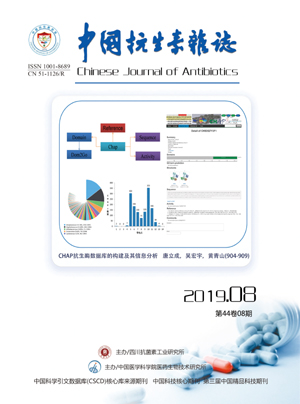
2019, 44(8): 904-909.Objective To establish a database of CHAP enzybiotics, we collected and analyzed the known information of CHAP enzybiotics. It will help researchers to study its functional mechanisms and to design and develop novel CHAP enzybiotics. Methods We collected CHAP enzybiotics information from public databases and scientific literatures, and used UniProtKB, InterPro, PDB, GO, and BioPerl for information correlation and annotation. We used Apache, MySQL, PHP, Perl, and jQuery to build databases and web pages. Results We constructed a database of CHAP enzybiotics (http://biotechlab.fudan.edu.cn/database/chap) on WAMP platform. The CHAP database contains 1,572 CHAP enzybiotics from 263 sources. The Web interface provides functions such as browsing, searching, and statistical information, allowing users to quickly access data based on defined search criteria and to analyze the sequence, structure, source, function, and materialization properties of CHAP enzybiotics. Conclusion As a unique tool for enzybiotics research, the CHAP enzybiotics database has a variety of potential applications, and provides a very useful research tool for researchers to conduct CHAP enzybiotics research.
-
2019, 44(8): 910-914.Objective To discover ginkgolic acid C17:1 derivatives which have antibacterial or synergistic activity. Methods Ginkgolic acid C17:1 derivatives were obtained by substituting some groups for the carboxyl groups on the benzene rings. Their antibiotic-enhancing effects were determined on 96-well plate using checkerboard design. The synergistic mechanism was explored by measuring Zeta Potential, ROS and NPN absorption. Results The fractional inhibitory concentration indices (FICIs) of ginkgolic acid C17:1Ⅱ combined with daptomycin against Enterococcus faecalis were 0.125~0.25, a significant datum to prove the synergetic effect. Ginkgolic acid C17:1Ⅱ could not only produce higher reactive oxygen, but also changed the permeability of cell membrane to some extent. Conclusion Ginkgolic acid C17:1Ⅱ combined with daptomycin had good synergistic effect, which might be related to the proliferation of ROS and changes in membrane permeability.
-
2019, 44(8): 915-919.Objective The key genes of tylosin biosynthesis of tylD, tylF and tylJ were amplified with genomic DNA of Streptomyces fradiae industrial strain as PCR template, and double-copy tylD, tylF and tylJ Streptomyces fradie strain was constructed. The tylosin potency of engineered strains was verified by the shake flask fermentation. The expression of tylD, tylF, and tylJ of screened strains were detected by the way of real-time fluorescence quantitative PCR. The results showed that the highest increase of flask fermentation potency of engineering stains reached to 28.1% compared with that of the initial strain. Expression of tylD, tylF and tylJ genes in the engineering strain were higher than those of the initial strain and reached to the maximum in stationary phase. By constructing a double-copying tylD, tylF, and tylJ Streptomyces faecalis strains, the speed-limiting in the synthesis of tylosin can be removed, which could greatly improve the production of tylosin.
-
2019, 44(8): 920-923.In this paper, the growth characteristics (the mycelium morphology and pacted mycelium volume) and fermentation medium for a strain of Streptomyces microaureus CIT-04), which produced kasugamycin, were studied. The results indicated that the hypha patterns changed greatly during the cultivation with seed medium. The best inoculate time was 33h when the seed mycelial concentration was 25% PMV. The optimization of the medium was carried out by using the orthogonal analytical method, and the optimum medium components was: soybean cake powder (4%), edible soybean oil (2.5%), KH2PO4 (0.05%), corn starch (0.1%), NaCl (0.5%), peptone (0.5%), maltose (3%), silkworm chrysalis powder (1%), and MgSO4 (0.03%). Under the optimized condition, the titer of kasugamycin produced by CIT-04 was up to 18780U/mL.
-
2019, 44(8): 924-929.The clearing effects of new ceramic membrane with different pore sizes to clear rod acid fermentation broth were investigated by using the clavulanic acid fermentation liquid as the feed liquid. By detecting the rejection rate, filtration flux and yields of clavulanic acid using ceramic membranes with different pore sizes were evaluated. The ceramic membrane with the best pore diameter was determined. Then the operating parameters of the apertured ceramic membrane were optimized. The clearing effect of ceramic membranes was compared with that of the membrane integration process method which is currently widely used. The results showed that the 8nm ceramic membrane was superior. When the temperature was 10~14℃, the concentration was 1.65 times, and the water filtration was 3.0BV, membrane filtration flux can reach 62L/(m2·h), which was 10.7% higher than that before optimization; and the yield was 97.5%, which was about 2.5% higher than that before optimization. Compared with the membrane integration process, the clearing effect of the one-step 8nm ceramic membrane method was similar, but the operating cost was reduced by 2 times; the investment cost was reduced by 1.6 times; and the yield was also increased by about 2.5%. With the conventional cleaning method, the water flux of the ceramic membrane could be recovered, and the membrane had good regenerability.
-
2019, 44(8): 930-937.The starting material ACLE·HCl was reacted with the thiadiazole moiety (7-side chain) TATD, subsequently the pyrazole moiety UBT was introduced and the global deprotection was accomplished with trifluoroacetic acid. Finally, ceftolozane sulfate was synthesized after purification and crystallization. The ceftolozane sulfate in high purity was prepared via the process which comprised no columns during purification for the final product. Furthermore, the raw materials of this process were easy to obtain. The process could thus easily be scaled up to an industrial process.
-
2019, 44(8): 938-941.Objective To study on the synthesis of zoledronic acid. Methods Imidazole and tert-butyl chloroacetate were employed to synthesize zoledronic acid via multi-step reactions including alkylation of imidazole, hydrolysis, condensation, and recrystallization. Results The target product was obtained with a 32% overall yield. Conclusion The newly developed synthetic process is free of highly toxic reagents with mild reaction conditions, simple operation and commercially available materials, which is suitable for industrial production.
-
2019, 44(8): 942-945.At the present, the outstanding quality problem of cephalosporins for injection is that the "clarity of solution" does not meet the requirements. The main cause of the clarity problem is related to the compatibility of the drugs with the rubber closures, and the adsorption ability of the different crystalline drugs to the volatile components of the rubber closures is different. In this research, the volatile components in rubber closures which interact with cefazolin sodium were determined by using the established compatibility study strategy, and the compatibility between rubber closures and cefazolin sodium with different crystal forms was evaluated. The results can be used to select the appropriate rubber closures of the cefazolin sodium, and to realize the quick evaluation of the compatibility between the cefazolin sodium and the rubber closures.
-
2019, 44(8): 946-952.Objective To establish a method for the determination of the particle size distribution of ciclesonide. Methods The Malvern Mastersizer 2000 laser size analyzer was used. The conditions of determination were as follows: The test solution was prepared with 0.01% (W/W) Tween 20 as a concentrated solution, and disperse the sample in 500mL water, the pump of Malvern laser particle size analyzer was set at 2000r/min, laser obscuration was set between 10%~15%, ultrasonic energy and ultrasonic time were 12.5 and 120s, sample measurement time and sample measurement snapshot were 10s and 10,000, and background measurement time and background measurement snapshot were 10s and 10,000. Results The d0.1, d0.5 and d0.9 average of particle size distribution of three batches were 1.215, 2.726 and 5.734μm, respectively. The average standard deviations were 0.086, 0.186 and 0.251μm, respectively. The results were generally consistent with the microscopy method. Conclusion The method is simple, accurate, reproducible, and with high precision, which is suitable for the particle size control of micronized ciclesonide.
-
2019, 44(8): 953-957.Objective To investigate the distribution of bacteria and drug resistance in ICU patients in three general Grade 3A hospitals during the recent three years, so as to provide the basis for clinical treatment. Methods Retrospective analysis of 1856 cases of pathogenic bacteria were selected from ICU of three hospitals during 2015—2017. The strain identification and drug sensitivity analysis were analyzed with the MicroScan WalkAway 96 and VITEK 2 bacterial susceptibility analyzer. Results Gram-negative bacteria accounted for 68.32% (1,268/1,856), Gram-positive bacteria accounted for 15.41% (286/1856), and fungi accounted for 16.27% (302/1,856). Acinetobacter baumannii was the main strain of Gram-negative bacteria isolated, Staphylococcus epidermidis was the dominant bacteria in Gram-positive bacteria, and fungal infections were on the rise. The resistance rates of A. baumannii to ampicillin, cefotaxime, ceftriaxone, cefazolin, cefxitin and aztreonam were more than 95.0%. The strain Gram-positive bacteria were most sensitive to vancomycin, but the resistant rates to penicillin G and erythromycin were more than 70.0%. Conclusion The pathogens of ICU were still Gram-negative bacteria, and the drug resistance was serious.
-
2019, 44(8): 958-962.Abstract Objective To analyze the blood culture pathogens and their drug resistance in patients with infective endocarditis, and provide reference for clinical rational drug use. Methods Retrospective study was carried out on patients with infective endocarditis diagnosed clinically in our hospital from January 2013 to December 2017. Pathogenic microorganism characteristics and drug sensitivity were analyzed in combination with clinical cases. Results A total of 326 pathogenic bacteria were detected in 166 patients with infective endocarditis. Among them, 248 strains of Gram-positive bacteria accounted for 76.1%. There were mainly 141 strains of Streptococcus viride (43.3%), 30 strains of Staphylococcus epidermidis (9.2%), and 8 strains of Staphylococcus aureus (2.5%). 78 strains of Gram-negative bacteria accounted for 23.9%. There are mainly 23 strains of Burkholderia gladiolus (7.1%), 9 strains of Stenotrophomonas maltophilia (2.8%), and 8 strains of Flavimonas oryzihabitans (2.5%). Gram-positive cocci were not found to be resistant to vancomycin and linezolid. The resistance rate of Streptococcus viridans to erythromycin and clindamycin was 58.6% and 71.5%, respectively; penicilin G, ampicillin, chloramphenicol, cefotaxime, ceftriaxone, and cefepime showed better sensitivity and substantially no drug resisance. The resistance rates of Staphylococcus epidermidis and Staphylococcus aureus to penicillin G were 100%, and the resistance rates to oxacillin, erythromycin and tetracycline were more than 56.7%. Among the Gram-negative bacteria detected, the resistance rates of Burkholderia gladiolus and Flavimonas oryzihabitans to ceftriaxone and ceftazidime were 26.5%~56.3%, and Burkholderia gladiolus and Flavimonas oryzihabitans were sensitive to other antibiotics. Stenotrophomonas maltophilia was sensitive to minocycline, compound neotamine, and levofloxacin. Infective endocarditis pathogens showed a trend of resistance to various antibiotics gradually. In recent years, Streptococcus viridis appeared resistant to cefotaxime, ceftriaxone and cefepime. The resistance rate of Staphylococcus to oxacillin was as high as 70.9%. In recent two years, the resistance rates of Staphylococcus epidermidis to compound sulfamethoxazole, levofloxacin, and ciprofloxacin were more than 50%, and gentamicin-resistant strains appeared. Gram-negative bacteria were mainly resistant to cephalosporins, and their resistance rates were increasing. Conclusion Infectious endocarditis has become a common infectious disease in hospitals in recent years. Gram-positive cocci are the main pathogens. With the widespread use of antibiotics, the resistance of pathogenic bacteria to antibiotics has increased significantly, and the emergence of drug-resistant strains has brought great difficulties to clinical treatment. Therefore, we should pay close attention to the distribution of pathogenic bacteria and the change of drug resistance in infective endocarditis, so as to make early and effective diagnosis and treatment and improve the survival rate of patients.
-
2019, 44(8): 963-967.Objective To evaluate different in vitro tigecycline susceptibility test methods for carbapenem-resistant Klebsiella pneumoniae (CRKP). To understand the resistance of CRKP to tigecycline in Liaoning province, and provide evidence for rational clinical drug use. Methods A retrospective collection of 269 strains of CRKP isolated from January 2011 to December 2016 in several large hospitals in Liaoning province. Sensitivity of tigecycline to CRKP was detected by the broth microdilution method (BMD), the K-B disk diffusion method, the Vitek-2 method, and the E-test method. Results The MIC50 and MIC90 of BMD, the E-test method, and the Vitek-2 method were as follows: (0.5/1), (0.25/0.5) and (0.5/4)μg/mL. According to the US Food and Drug Administration (FDA) and the European Committee on Antimicrobial Susceptibility Testing (EUCAST), the sensitivity of CRKP to tigecycline by BMD was 97.4%/93.3%, and the intermediate rate was 2.2%/4.1%, and the resistance rate was 0.4%/2.6%. The E-test method had the highest sensitivity rate of 100%/98.9%, the Vitek-2 had the highest resistance rate of 8.6%/13.4%, and the disk diffusion method had the highest intermediate rate of 11.9%/46.5%. Compared with the BMD method, the essential agreement rates (EA) and the categorical agreement rates (CA) of the E-test method were≥90%, but there was the very major error (VME) of 0.4%/1.9%, respectively. In the Vitek-2 results, EA was only 61.7%, CA was 87.4%/72.1%, the major error (ME) was 6.3%/7.4%,and no VME was produced. The results using the disk diffusion method, CA was only 85.9%/46.5%, the minor error (mE) was 1.9%/2.6%, and the ME was 0.7%/5.6%. A total of 251 CRKP tigecycline MIC<2μg/mL was determined by the BMD method. Most of the MIC values measured by the E-test method were the same as or different from the BMD method by ±1 dilution. The MIC values measured by the Vitek-2 method were higher than those of the BMD method. 1, 2, and 3 dilutions accounted for 40.2%, 27.5% and 10.4%, respectively. Conclusion The vast majority of CRKP in Liaoning still maintains high sensitivity to tigecycline. For CRKP, the E-test method, the Vitek-2 method, and the disk diffusion method are not suitable for the detection of tigecycline sensitivity alone. Joint detection can be considered and the BMD method should be referred to when results are inconsistent.
-
2019, 44(8): 968-974.Objective To compare the safety of carbapenem drug meropenem (MPEM) and imipenem-cilastatin (IPM/CST) in the treatment of severe infections and to provide a safety basis for clinical drug selection. Methods CNKI, Weipu, Wanfang, CBM, and Pubmed were searched to collects RCTs of randomized controlled trials on MPEM and IPM / CST in the treatment of severe infections published at home and abroad since 1990. RevMan 5.3 software was used to evaluate the safety. Results 41 literatures were selected. The overall results showed that the incidence of adverse reactions of meropenem in the treatment of severe infections was not lower than imipenem/cilastatin (Z=1.99, P=0.05). In subgroup analysis, the incidence of adverse reactions of meropenem was lower than that of imipenem/cilastatin in the treatment of lower respiratory tract infections (Z=2.54, P=0.01<0.05). There was no significant difference in the incidence of adverse reactions in the treatment of abdominal infections (Z=0.79, P=0.43>0.05). Symptoms of adverse reactions showed that digestive system was the most common, followed by the circulatory system, skin, and the injection part. Meropenem caused more rashes than imipenem/cilastatin, while imipenem/cilastatin caused more adverse reactions in other systems. Conclusions The rate of adverse reactions of meropenem and imipenem/cilastatin in the treatment of severe infections was similar, it was lower only in the lower respiratory tract infections. Meropenem was more common than imipenem/cilastatin in the occurrence of rash, but other symptoms were lower than imipenem/cilastatin.
-
2019, 44(8): 975-981.Objective To systematically evaluate the efficacy and safety of biapenem and meropenem in patients with bacterial infections. Methods Databases of Ovid EMBase, Pubmed, Cochrane Library, CNKI, CBM, VIP, and WanFang were searched. Each included study was screened, data extracted and methodological quality assessed, then analyzed by Rev Man 5.3 software. Results A total of 11 RCTs involving 1873 patients were included. Meta-analysis showed that biapenem was superior to meropenem in total effective rate [OR=1.55, 95%CI (1.13, 2.13), P=0.007], rate of bacterial clearance [OR=1.65, 95%CI(1.15, 2.38), P=0.007], and incidence of adverse drug reaction [OR=0.67, 95%CI(0.48, 0.92), P=0.01]. There were no statistically significant differences in cure rate [OR=1.24, 95%CI(1.00, 1.52), P=0.05] and incidence of adverse events [OR=0.58, 95%CI(0.29, 1.16), P=0.13] between two groups. The funnel plot showed no significant publication bias. Conclusion Based on the existing clinical evidence, biapenem can effectively treat bacterial infections and reduce the overall incidence of adverse drug reactions compared to meropenem.
-
2019, 44(8): 982-985.Objective To evaluate in vivo antimicrobial activities of novel glycopeptide antibiotics B7011 in murine septicemia model of clinic isolated bacterial infections. Methods We researched the protective effects of B7011 and vancomycin in septicemia model of Gram-positive bacterial infections, and then we calculated and compared the ED50 and ED95 of the two drugs with DAS2.1.1. Results B7011 showed good protective effects in septicemia model of MSSA, MRSA, and VRE infections. The ED50 values against the three bacteria were 0.722, 0.193, and 0.395mg/kg, respectively. Compared to vancomycin, in protective test of septicemia model in mice infected with MRSA and VRE, the ED50 parameters of the two drugs were significantly different (P<0.05). In the protective test of septicemia in mice infected with MSSA, there was no significant difference in ED50 parameters between the two drugs (P>0.05). Conclusion The results showed that B7011 had a good antibacterial effect against Gram-positive bacteria, especially that the death amount of the mice with acute infections of the drug-resistant bacteria could be obviously reduced, and the protective effect was obviously better than vancomycin. Combined with test in vitro, the results indicate that B7011 is expected to be a new type of antibiotic which is clinically applied to drug-resistant bacteria and has a better therapeutic effect.
-
2019, 44(8): 986-992.Objective To explore the influences of antibiotics used in the early life to the development of the intestinal microbiota and brain functional gene expression of the host. Methods 20 new born Kunming mice from eight mother mice were randomly divided into two groups (n=10/group). They were treated with antibiotics and sterilized water respectively since born. The tested mice were sacrificed on the 21d. The serum interleukin-6, tumor necrosis factor and corticosterone of the tested mice were analyzed with ELISA, and anatomic pathology of small intestine and colon were measured; 16S RNA next generation sequencing was used to profile fecal microbiota of the tested mice. Real-time qPCR were used to measure the mRNA expression of some important neurochemicals. Results Interleukin-6 in the antibiotic group was significantly higher than that in the control group (P<0.05), and corticosterone was lower than that in the control group (P<0.05). The colon crypts in the antibiotic group was lower than that in the control group (P<0.05); mRNA expression of GABAAα1 in the antibiotic group was higher than that in the control group (P<0.05) and the difference between the two group in the hippocampus and the prefrontal cortex was not statistically significant. The antibiotic group had lower Shannon and Simpson indexes than the control group (P<0.01, P<0.05). There were more proteobacteria in the antibiotic group, while there were more bacteroidetes and firmicutes in control group. Furthermore, Neisseria, Granulicatella, Erwinia, Fusobacterium, Streptococcus and Klebsiella were found in the antibiotic group, while there were more parabacteroides in control group. Conclusion The antibiotics used in early life could cause gut dysbiosis. Such changes might implicate neurochemicals in the brain. Therefore, gut dysbiosis in the early life might influence the brain function to a certain extent.
-
2019, 44(8): 993-S1.Objective The extensive use and wanton emission of antibiotics have brought great harm to the human living environment and physical health. The preparation of reasonable and effective photocatalyst without secondary pollution is an important means of photocatalytic treatment of antibiotic wastewater. Methods The modified Ge/TiO2 catalyst doped with Ge was prepared using the sol-gel method, and the photocatalytic degradation effects of ciprofloxacin (ciprofloxacin, CPLX) in waste water under different environmental conditions were analyzed. The concentration of different catalysts, light source, light time, pH, the concentrations of Cl- and NO3- coexistent in water were discussed, and five factors were applied to cyclopropyls and used to determine the effects on the degradation rates. Results The modified Ge/TiO2 catalyst had good photocatalytic degradation performance, and the reaction accorded with the L-H kinetic equation. The degradation process was pseudo first order reaction. Under UV light, the initial concentration of ciprofloxacin was 10mg/L, pH was 7.5, the catalyst concentration was 1.5g/L, and the highest degradation rate was achieved when light time was 150min. It is speculated that the photocatalytic mechanism of the modified Ge/TiO2 catalyst basically occured on the surface of the catalyst. The degradation of ciprofloxacin was mainly a radical reaction. Conclusion Under the optimum conditions, the degradation rate of ciprofloxacin reached 97.99%.

