Archive
-
-
2021 Volume 46 Issue 01
Published: 25 January 2021
-
Select all|
-
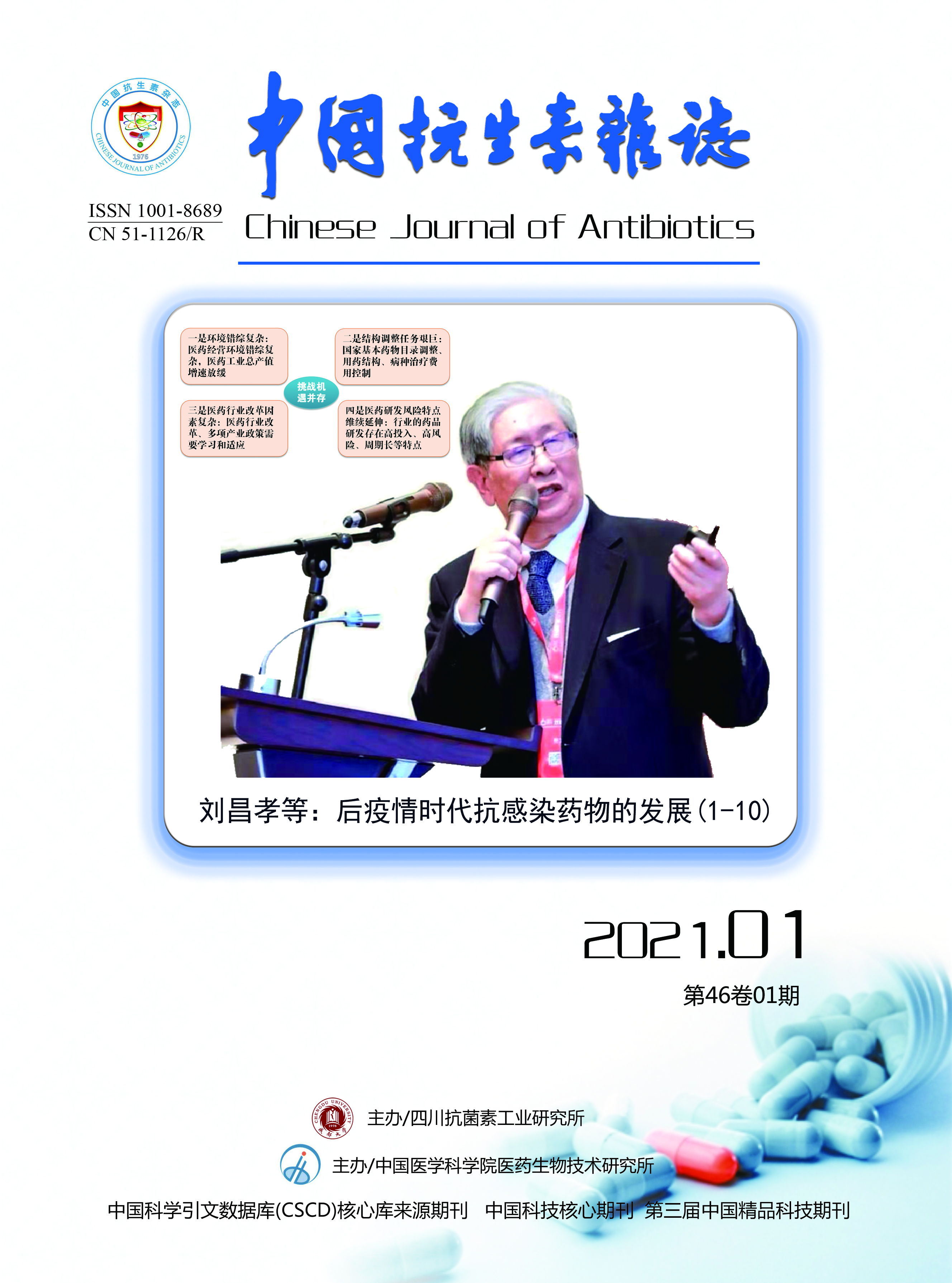
2021, 46(01): 1-10.There have been three coronavirus incidents in the new century. SARS in 2003, MERS in 2015, and novel coronavirus in 2020 have exploded and threatened the world. The epidemic situation shows us the importance of research and development (R&D) of anti-infective drugs and vaccines. In this paper, starting from the current R&D situation of anti-infective drugs in the industry, we can see that in recent years, the global anti-infective drugs have the following characteristics: the market of antiviral drugs has soared, and there is no effective drug and vaccine to be developed especially for coronavirus infection, while the development of antibiotics is slow and the drug resistance situation is grim. The world pays attention to the innovation and development of new drugs for anti-infective drugs, and the prevention and control of novel coronavirus is a world problem today. The world pays attention to the situation of tuberculosis prevention and control and the arduous task of AIDS prevention and control. We need to analyze the opportunities and challenges of drug R&D. Therefore, it is necessary to construct a new pattern to promote the development of biology and medicine, encourage drug research and development in the big-data era, arouse attention to the scientific nature of innovation and R&D, and build a public health system against infectious diseases with safe and effective new products.
-
2021, 46(01): 11-19.The trend of bacterial resistance to antibacterial drugs is becoming more and more serious. Non-drug antibacterial compounds (e.g., disinfectants, preservatives, and insecticides) used in health care, agricultural, food, and other fields not only can help achieve disinfection, preservation, and hygiene, but they can also promote the development of cross-resistance and/or co-resistance to various antibacterial compounds. In the present review, we focus on the bacterial cross-resistance and co-resistance to antibacterial drugs, disinfectants, antimicrobial peptides, and heavy metal compounds, as well as on the potential connection of reactive oxygen species (ROS) with bacterial cross-resistance or co-resistance. Such information will help better understand bacterial resistance to diverse antibacterial compounds and develop new anti-infective treatment strategies.
-
2021, 46(01): 20-26.Staphylococcus aureus is one of the leading human pathogens that is responsible for a number of community acquired and nosocomial related infections worldwide and it is easy to form biofilm. Traditional antibiotic treatment leads to a huge number of the production of resistant strains. It is difficult to completely cure once the patient has the Staphylococcus aureus biofilm infection. Frequent treatment greatly increases patients' pain and financial burden. Therefore, new antibacterial agents need to be developed to combat biofilms. This paper makes a summary on advances in the prevention and treatment of Staphylococcus aureus biofilms to provide new ideas for it.
-
2021, 46(01): 27-33.With the rapid development of animal husbandry in China, a large number of antibacterial drugs for veterinary use have been used on animals, and the amount has increased year by year. Due to the irrational use of antibacterial drugs for veterinary use, drug resistance was triggered, and a series of treatment failures appeared, which caused potential harm to animals and human health. Therefore, the risks caused by the use of antibacterial drugs to human and animal health have received widespread attention. At present, veterinary antibacterial drug risk assessment techniques have been widely used to predict the risk of drug-induced resistance, and to reveal the risks caused by the use of antibacterial drugs and the risk of drug resistance that poses a threat to human and animal health. This article mainly reviews the research on the risk assessment of antimicrobial resistance in veterinary medicine at home and abroad, and provides a reference for the development of drug resistance risk assessment in China.
-
2021, 46(01): 34-41.Objective The effect of camellia oil on spinosad production by Saccharopolyspora spinosa AEG3-1 was studied. Methods Firstly, the optimum vegetable oil was selected by the single factor experiment. Then, the concentrations of the optimal vegetable oil, glucose, dextrin, and cottonseed protein in the fermentation medium were optimized by using the response surface methodology design. Finally, results were verified in a 5L fermenter. Results The optimum vegetable oil was camellia oil of 15.0g/L at 0h. The optimum medium (g/L) was as follows: Camellia oil 15.1, glucose 51.6, dextrin 19.7, cottonseed protein 21.8, and the production reached 318.25mg/L with an increase of 55.61%. In a 5L fermenter, using the optimized media, the spinosad production in batch and fed-batch fermentation reached 361.97mg/L and 512.36mg/L, respectively. Conclusion The spinosad production of the mutant strain was significantly improved by adding camellia oil, indicating that the production process was feasible and could provide a reliable basis for the large-scale production of spinosad.
-
2021, 46(01): 42-48.Objective Atmospheric and room temperature plasma (ARTP) mutagenesis combined with antibiotic resistance screening was used to obtain high-yield sisomicin strains. Methods First, we obtained a S4 strain with a higher yield than the starting strain, which was obtained through streptomycin resistance screening. Then we used S4 as the starting strain and treated S4 with atmospheric and room temperature plasma (ARTP) for 40s. Then the strains were screened for resistance with streptomycin paromomycin and ampicillin, and dual resistance was introduced step by step. Finally, the positive mutants were mutagenized again and combined with high concentration streptomycin resistance screening. Results The strain of Micromonospora inyoensis SAAP22 with high sisomicin production was obtained. The titer was 38.18% higher than the original strain and it has stable genetic property. Conclusion The method of using atmospheric and room temperature plasma(ARTP) mutagenesis combined with antibiotic resistance screening can effectively improve the ability of Micromonospora inyoensis to produce sisomicin. The Micromonospora inyoensis strain SAAP22 has potential application value to produce sisomicin.
-
2021, 46(01): 49-52.First, D-7-ACA and BTPA were used as starting materials. Then the starting materials were subjected to condensation reaction and lactonization reaction to obtain intermediate 1. Subsequently, intermediate 1 was subjected to deprotection reaction to synthesize cefcapene lactone compound. Finally, the cefcapene lactone compound was combined with hydrochloric acid to synthesize cefcapene lactone compound hydrochloride. Cefcapene lactone compound hydrochloride in high purity and yield was prepared via the process. Furthermore, the raw materials of this process were easy to obtain. The correctness of the chemical structure of cefcapene lactone compound hydrochloride was confirmed by structural confirmation (UV, IR, MS and NMR data).
-
2021, 46(01): 53-61.Objective To evaluate the suitability of the statutory standards and the quality of ampicillin and probenecid capsules of different domestic manufacturers. Methods According to the general requirements of national assessment program, the statutory standard method combined with exploratory researches were used to evaluate the quality of ampicillin and probenecid capsules. Results According to the statutory standards for the examination of the 38 batches, the unqualified rate was 13.2%, and the unqualified items were dissolution and content determination, and the unqualified products came from enterprise E. The standard test results showed that current standards were not uniform. There were some problems, such as unreasonable setting of material gradient, unreasonable calculation method and infeasible determination method of dissolution. The impurity profile was established. The sources and structures of major impurities and were confirmed. A new method for the determination of related substances in ampicillin and probenecid capsules using the impurity-based sub-region calculation method and the method for dissolution were established. According to the exploratory researches for the examination of the 38 batches, the unqualified rate was 26.3%, and the unqualified items were dissolution and the related substances. Conclusion Current standards can basically control the quality of the drug, but some items need to be improved. The quality of ampicillin and probenecid capsules were generally acceptable. It was suggested that enterprises improve the production process and improve the quality of drugs.
-
2021, 46(01): 62-67.Objective To describe the epidemiology of pathogens isolated from blood cultures and antimicrobial resistance over the eight-year period. Methods This study retrospectively analyzed data from blood cultures and sensitivity testing in our hospital from January 2012 to December 2019. SPSS software was used to compare the pathogens changes and antimicrobial resistance. Results A total of 2374 strains were isolated with the Gram-negative bacteria account for 73.6% (1,747 strains), and Gram-positive bacteria account for 26.4% (627 strains). The most frequently isolates were Escherichia coli (735 strains, 31.0%), Klebsiella pneumonia (429 strains, 18.1%), Staphylococcus aureus (144 strains, 6.1%), Acinetobacter baumanii (126 strains, 5.3%), and coagulase-negative Staphylococcus (104 strains, 4.4%). Compared with the year of 2012 to 2013, a significantly increased isolation was observed in Klebsiella pneumoniae and coagulase-negative Staphylococcus, but a significantly decreased isolation was observed in Escherichia coli from the year 2018 to 2019 (P<0.05). The increasing trends of resistance rates of E. coli to most of tested antibiotics were not found over the 8-year period. However the antimicrobial susceptibility of Klebsiella pneumonia isolated from the year 2018 to 2019 was obviously lower than that from the year 2012-2013, such as Piperacillin tazobactam (69.1% vs. 93.0%), ceftriaxone(54.3% vs. 73.7%), cefepime (65.1% vs. 91.2%), ciprofloxacin (53.1% vs. 80.7%), imipenem (74.3% vs. 100.0%), and meropenem(74.9% vs. 100.0%). The resistance of Acinetobacter Baumanii against most of antibiotics showed increasing trends with the sensitivity rate to most antibiotics lower than 25% in the years from 2018 to 2019 expect amikacin(57.6%). The resistance rate of Acinetobacter baumanii against imipenem reached over 75.8%. Compared with Staphylococcus aureus, coagulase-negative Staphylococcus showed higher resistance to common antibiotics. The prevalence of methicillin-resistant coagulase-negative Staphylococcus and methicillin-resistant Staphylococcus aureus was 88.4% and 21.6% respectively in the years from 2018 to 2019. But they showed completed sensitivity to vancomycin, linezolid and tegacycline. Conclusions The Gram-negative bacteria were most frequently isolated from bloodstream cultures and showed an increasing tendency during the past 8 years. Antibiotic resistance rates have been rising for most predominant organisms, and therefore calls for concerted efforts aimed at resistant organisms and dynamic surveillance.
-
2021, 46(01): 68-71.Objective To detect the clinical distribution, drug resistance, and carbapenemase expression of clinically isolated imipenem-resistant Klebsiella pneumoniae to provide a basis for the rational use of antibiotics. Methods The non-repetitive Klebsiella pneumoniae cultured in the microbiology room of three tertiary hospitals in Xuzhou was collected, and the strains resistant to imipenem were screened based on the drug sensitivity results. The modified Hodge test was used to detect the carbapenems. The IPM/EDTA combined paper method was used to detect the metalloenzyme phenotype, and the expression of blaKPC-2, blaVIM, blaOXA-48, blaIMP, blaCTX-M and blaNDM-1 in drug-resistant strains was detected by PCR experiments. Results A total of 107 non-repeated Klebsiella pneumoniae isolates were collected, of which 26 were imipenem-resistant. The imipenem-resistant strains were multi-drug resistant strains, which were resistant to common antibacterial drugs. 23 imipenem-resistant strains were positive for the modified Hodge test, with a positive rate of 88.5%; 6 strains were positive for the combined disc method, with a positive rate of 23.1%; PCR-related genes with carbapenemase activity were identified: 26 strains with the KPC-2 encoding gene was detected, the CTX-M-15 encoding gene was detected in 25 strains, the IMP-4 -encoding gene was detected in eight strains, the NDM-1 encoding gene was detected in one strain, and the VIM-1 encoding gene was detected in one strain. The OXA-48 gene was not detected. Conclusion The imipenem-resistant form of Klebsiella pneumoniae in this area is severe, and β-lactamase production is the main mechanism of resistance. KPC-2 and CTX-M-15 have high production rates, and they dominate. There are NDM-1 producing strains, and relevant departments should pay attention to preventing their epidemic and spread.
-
2021, 46(01): 72-75.Objective To study the drug resistance and drug resistance genes of Acinetobacter baumannii in intensive care unit (ICU) in order to guide clinical rational drug use and control the outbreak of infections in ICU. Methods The VITEK2-compact automatic bacterial identification drug susceptibility system was used for the identification and susceptibility test of bacteria. The polymerase chain reaction (PCR) method was used to detect six common carbapenemase resistance genes (blaIMP, blaVIM, blaNDM, blaOXA-23, blaOXA-24 and blaOXA-58). Results 38 strains of carbapenem-resistant Acinetobacter baumannii were all resistant to 15 common clinical antibiotics, including penicillins, cephalosporins, aminoglycosides, quinolones, and β-lactamase inhibitors. The resistance rates of piperidone/sulbactam and minocycline were 92.1% and 81.6%, respectively, and they remained sensitive to tigecycline only, with a sensitivity rate of 94.7%. A total of 36 (94.7%) blaOXA-23 genes were carried in 38 CRAB strains, and no blaIMP, blaVIM, blaNDM, blaOXA-24, and blaOXA-58 genes were detected. Conclusion Carbapenem-resistant Acinetobacter baumannii isolated from our hospital was widely resistant to commonly used antibiotics in the clinic. The main reason for carbapenem resistance of carbapenem-resistant Acinetobacter baumannii in ICU of our hospital maybe was the strains carrying the blaOXA-23 gene. Clinicians should use antibiotics reasonably, strengthen the monitoring of bacterial resistance, and prevent the production and further spread of drug-resistant strains.
-
2021, 46(01): 76-80.Objective To explore the risk factors and treatment of patients with carbapenem resistant Acinetobacter baumannii (CRAB) bloodstream infection (BSI), and to provide references for CRAB infection. Methods AB BSI patients in our hospital in the past five years were retrospectively summarized and analyzed. According to the drug susceptibility results, they were divided into carbapenem-resistant AB (CRAB) group and carbapenem-susceptible AB (carbapenem susceptible to Acinetobacter baumannii, CSAB) group to analyze the risk factors. CRAB BSI patients were divided into a tigacycline group and a non-tigacycline group to compare their clinical features and prognosis. Results With septic shock, the use of glucocorticoid and gastrointestinal intubation, with hypoproteinemia, the use of hormone before diagnosis, and WBC count ≥12×109/L after 3 days of antibiotics were independent risk factors for CRAB bloodstream infection. The 28-day mortality rate in the CSAB group was 12.5%, while that in the CRAB group was 56.70%, significantly higher than that in the CSAB group (P<0.001). The 28-day mortality rate was 58.82% in the tegacycline group and 55.56% in the non-tegacycline group (P>0.05). Conclusion The mortality of CRAB bloodstream infection is high, with septic shock, and the use of glucocorticoid and gastrointestinal intubation, with hypoproteinemia, the use of hormonebefore diagnosis, and WBC count ≥12×109/L
after 3 days of antibiotic use indicate poor prognosis. Tegacycline did not significantly reduce 28-day mortality rate and improve prognosis.
-
2021, 46(01): 81-86.Objective To investigate the distribution of pathogenic bacteria and their resistance to common antimicrobial agents in patients with chronic renal failure after renal transplantation. Methods A retrospective study was conducted to analyze identification of bacterial species and drug resistance on specimens of chronic renal failure patients with infections after renal transplantation in some third-grade class-A hospitals in Henan province from Jan. 2017 to May 2019. Results 147 strains of pathogenic bacteria were isolated from infected patients after renal transplantation, including Gram-negative bacteria (68.71%), Gram-positive bacteria, (14.29%), and fungi (17.01%). The top five pathogens were Klebsiella pneumoniae, Escherichia coli, Stenotrophomonas maltophilia, Acinetobacter baumannii, and Candida albicans. The main infection sites were respiratory tract (42.86%), urinary tract (16.33%), and blood system (11.56%). 35 Multidrug-Resistant Organism (MDRO) strains were detected totally, accounting for 23.81%. Most were Klebsiella pneumoniae (12 strains), Escherichia coli (5 strains), and Acinetobacter baumannii (5 strains). The Gram-positive coccus resistant to vancomycin, teicoplanin, or linezolid were not detected. Conclusion The pathogens causing infections were dominately Gram-negative bacilli, and the detection rates of multiple drug-resistant strains were high. It is necessary to strengthen the prevention and control of infections in patients after renal transplantation.
-
2021, 46(01): 87-S1.Objective To investigate the status of urinary tract infections and drug susceptibility of Streptococcus agalactiae (GBS) in patients with systemic lupus erythematosus (SLE), and provide evidence for clinical treatment. Methods A retrospective analysis of secondary urinary tract infections and drug susceptibility in patients with SLE from April 2011 to November 2018 in Xinjiang Uygur Autonomous Region People’s Hospital. Results There were 78 positive cases of urinary cultures in 153 SLE patients. Among the 45 cases of Gram-negative bacteria, 18 cases were Escherichia coli, nine cases were Klebsiella pneumoniae, six cases were Proteus mirabilis, and four cases were Gardnerella vaginalis. Four cases were Enterobacter cloacae, and four cases were Pseudomonas aeruginosa. Among the 33 cases of Gram-positive bacteria, 16 cases were GBS, six cases were Enterococcus faecalis, four cases were Staphylococcus, three cases were Enterococcus faecium, three cases were yeast, and one case of saliva chain cocci. Drug susceptibility results showed that 16 strains of GBS showed resistance to levofloxacin (31.25%), erythromycin (68.75%), tetracycline (37.5%), and clindamycin (81.5%). Intermediate strains to levofloxacin were 6.25%; The sensitivity rates to linezolid, penicillin, vancomycin, meropenem, ampicillin, and ceftriaxone were all 100%. Conclusion GBS caused by urinary tract infections in SLE patients should be paid attention to, and clinicians need to choose antibiotics reasonably based on the results of drug sensitivity.

